

The diagram is the model
Draw the data flows, trust zones and components of the device and its cloud. Threats, assets and controls attach to the diagram.
Medical device security
ThreatWeaver connects your system diagram, its threats, the risk of each threat and the controls that reduce it. Each step links to the next, from the data flow to the documents for your premarket submission.
Methods and references:AAMI TIR57ANSI/AAMI SW96ISO 14971FDA premarket cybersecurityISO/IEC 27005
A recording of the real tool on a sample continuous glucose monitor. An AI agent draws the model from a sketch, a person reviews each threat, and the risk report is ready to export.
The scene at the top of the page is a real sample: an infusion pump with its hospital, cloud and manufacturer systems. Here it is in ThreatWeaver.
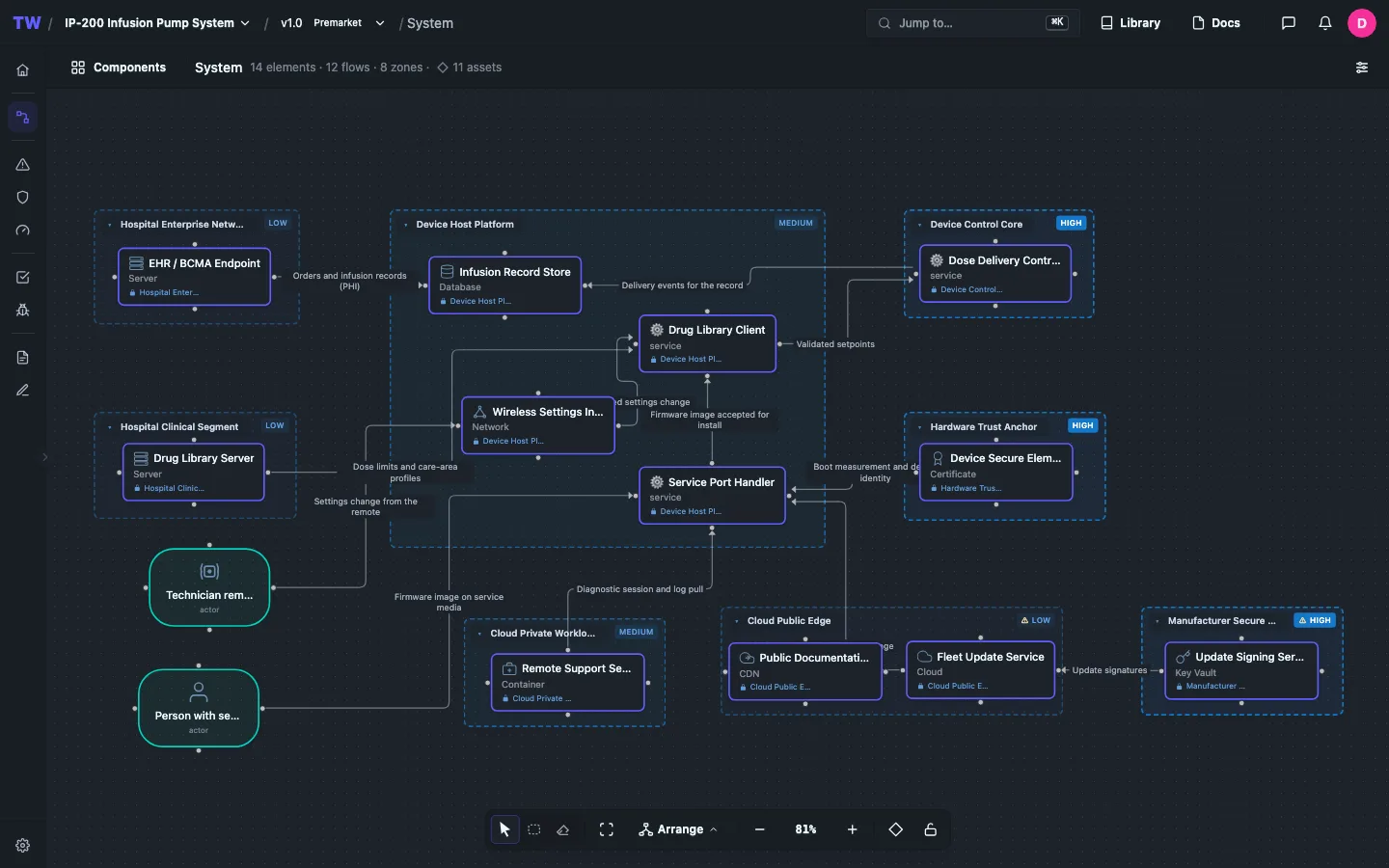
No separate spreadsheets. Threats, assets, risk and controls attach to the system that you draw.
Draw the data flows, trust zones and components of the device and its cloud. Threats, assets and controls attach to the diagram.
Agents propose threats, rate risk and match controls. A person accepts each proposal, and each decision keeps its rationale.
Import an SBOM and vulnerability scans, and put each finding in the context of the threat model. Export reports as PDF, Excel or CSV.
Security risk and patient safety impact stay separate and linked, with a hand-off to your ISO 14971 safety process. Each rating keeps its trace: the inputs and the rules that gave the result.
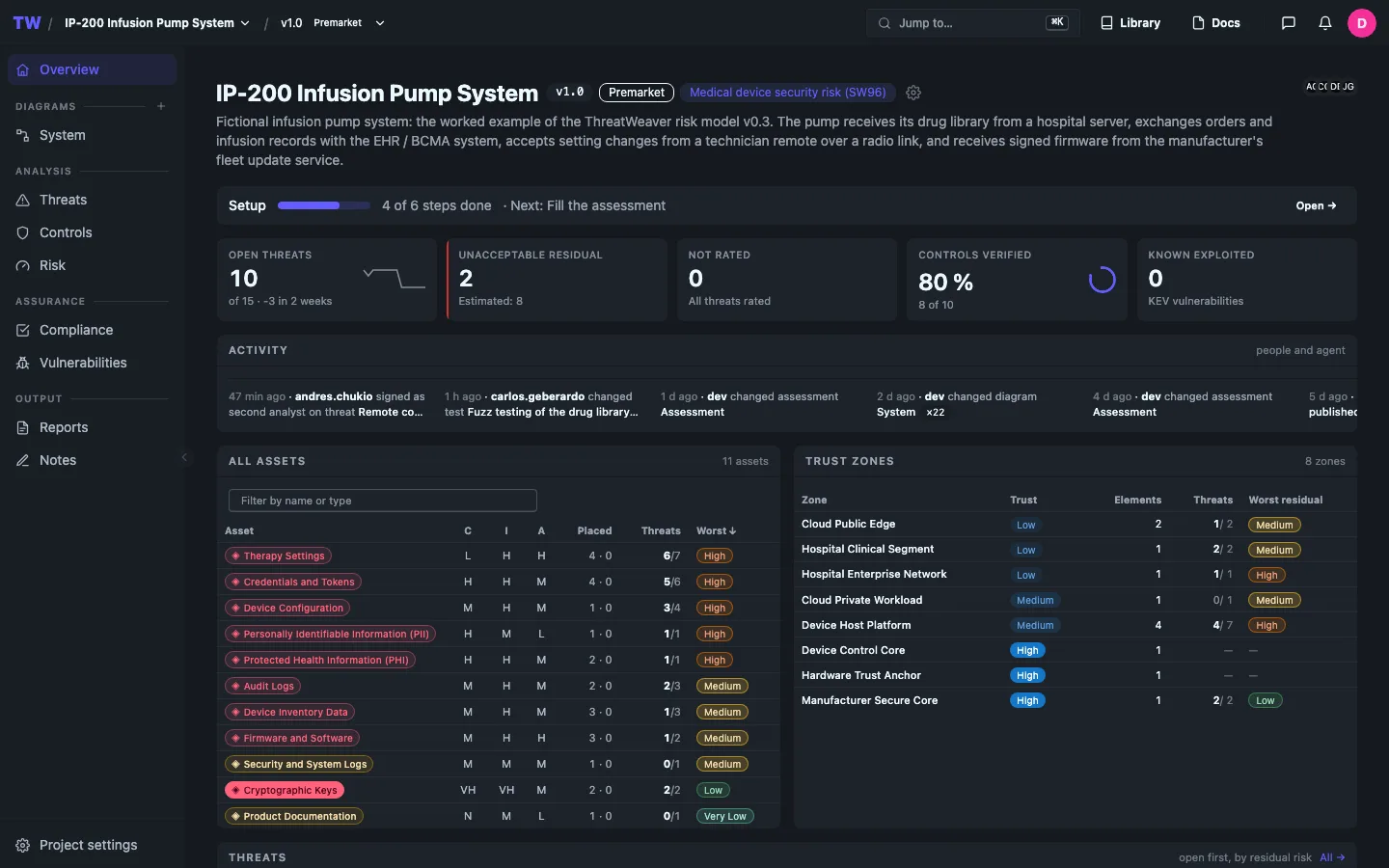
The project overview shows open threats, residual risk and verified controls of the whole assessment.
We give a demo on a sample device, or on yours. ThreatWeaver runs as a cloud service.
Book a demo